
Creating a unique system
Computers in the 70s

No 109 10/3/2025
In 1913, my grandfather moved his family to the remote Navajo reservation and built a trading post and family home. For the next 25 years, he lived with the Navajos. Unlike other North American traders, Navajo traders lived with the people. In most instances, the only friends and neighbors that the traders had were trading customers and their families. The Navajos spoke no English, had no money, and had no jobs; hardly stimulating conditions for success. Inventory control was organized by “Want Pads”. A trader would record his purchasing needs, send the pad with a return wagon to the Gallup Mercantile, and await delivery within three weeks. Since wagons could not operate between October and May, he had to anticipate his winter needs. All business was done with trading. Thus began a family legacy that spanned over one hundred years and three generations. I was part of the third trading generation beginning at age nine. Except for college and a brief corporate career, I was in the trading business for most of my life. The trading business has provided me with unique opportunities and experiences.
My corporate career was important to my development in the trading business because it gave me exposure and experience with the growing dynamics of computers. It was a stretch to think computers would one day be used in our trading business, but I made the connection that became reality and revolutionized the Indian trading business as we knew it.
I became interested in inventory and sales systems in the late 60s when I was with General Foods and selling to Disney for Dad’s Gallup Indian Trading Company. General Foods gave me an opportunity to learn about sales forecasting, and Disney challenged me because they worked with a manual inventory plan. Both would become foundational to my business development. There were ordained concepts of the Indian business that precluded the idea of computers because of the handmade “one-of-a-kind” nature of the business – or so everyone thought.
In 1975, Bill Gates and Paul Allen founded Microsoft in Albuquerque because it was the home of the Altair 8800 computer. Their company was exploding as they worked to keep up. To alleviate financing issues, they approached their Albuquerque law firm about trading stock in Microsoft for legal work. The law firm declined, and Microsoft moved to Seattle because of favorable family connections. What a lost opportunity for New Mexico.
The Internet concept began in a format called ARPANET, which was created by the Defense Department in 1969. The term “Internet” referred to connecting multiple networks beginning in the mid-70s. There were no browsers or websites. The process revolved around mainframe networks with command-line communications and protocol development.
I envisioned developing networks emanating from my current system to compatible systems, which I would provide with my key customers, such as Disney. Within a few years, I was “networking” with a retail location in Gallup that I had obtained for that purpose.
Earlier, I decided to expand my technology knowledge. I purchased a Basic Four system in Albuquerque that was an Altair 8800, compatible with Microsoft. Bill Gates and Paul Allen had created Microsoft BASIC for the Altair 8800. The computer system required a truck with special packing to transport it to Gallup to an isolated room at Gallup Indian Trading (GITCO) for installation, temperature control, and maintenance. The system was bulky and slow compared with the capacity of a modern-day laptop. The coding process was simply known as “C”.
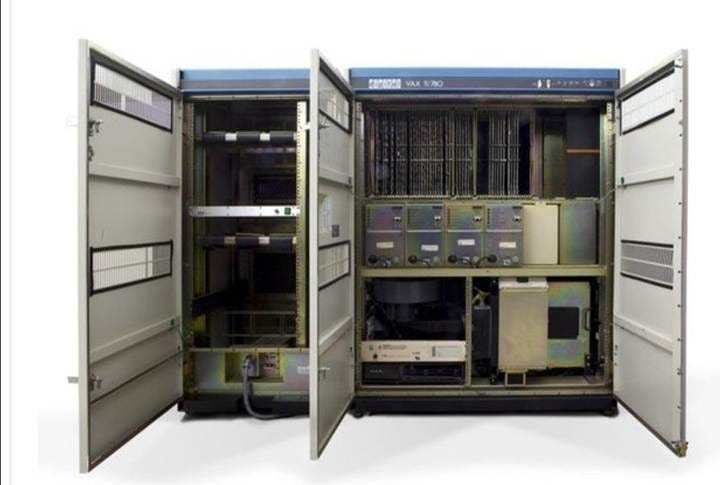
I hired a Microsoft programmer to bus over to Gallup on Friday afternoon. I picked him up at the bus station and then locked him in our store until Sunday afternoon, while he spent the weekend programming at GITCO, and then returned to Albuquerque.
I told the programmer what I wanted to accomplish, and he wrote code. I would check in regularly to see if I understood what he was doing and whether or not I could adapt it. We developed an inventory/sales program that revolutionized our business. It was no longer acceptable for us to have just the balance sheet data of inventory and sales. Balance sheets reflect general activity. Our new system was more specific.
At the time, we were handling over 20,000 pieces of Indian jewelry a year. Our volume grew to 30,000, along with 6,000 Navajo rugs, and thousands of Pueblo pots. We could analyze inventory and sales by product, price categories, and craftspeople, and manage accordingly. It was no longer a process of balance sheet figures but a breakdown of specific product categories and sales relationships. What good was an inventory of $1 million if there were inventory gaps relative to sales, even with handmade products? A high-dollar amount of inventory was marginalized if regular selling items were out of stock,
Prodigy was one of the first major consumer online service companies in the United States. It was a dial-up online platform that provided users with email, news, weather, shopping, banking, games, and later access to the web by developing websites. One of the Big Three auto manufacturers had an interesting website. I called Prodigy to inquire about website creation. The cost: $80,000, so website development took a backseat while I learned more about online selling. In the early 70s, I went to a seminar in Los Angeles about the Internet. At the time, there were an estimated 80,000 Internet users. The market was projected to increase in multiples of at least 10 each year, ad infinitum. I learned how to prepare items for sale on the Internet and then market them.
I thought of a unique product and launched a business selling deodorant stones. I was amazed that I could sell so many items with such little effort. Soon, the deodorant stones were encroaching on my trading business, and I let the activity die. I had no passion for the product.
Not long after that, the Internet exploded. Anyone with a marketing idea or product was selling their concepts and companies for unheard-of amounts of money. I toyed with a couple of ideas, which I later realized could have generated millions of dollars. I was ahead of my time, but I stayed focused on what I could do with computers in the Indian business.
When I started my own company in 1982, my first personal computer was a TRS-80 from Radio Shack. I used it to learn the practicality of Internet network marketing to streamline our system. We used the “C” coding from our main system as the basis for expanded usage, and by that time, personal computers were beginning to accommodate much of the work done by mainframes.
Mainframe computers were being taken over by personal computers. I hired the Radio Shack store manager, Mike, to organize my system with COBOL to simplify the use of our Altair system. COBOL was a relatively easy programming language based on business language. The premise is “If–Then”. If an outcome is desired, then logical steps must be created. Mike would program at work and come to my house with a stack of floppy disks to install his work. He could take my “If” and complete it with “Then”. In short order, I had the streamlined program that would become foundational to building our Fortune 100 customer database. It would be twelve years before any competitor would even own a computer for word processing and accounting. No one else conceived an inventory/sales program for the Indian arts & crafts business, and, to my knowledge, that is still true today.
My R&D and network expansion days were over when the IRS entered my sphere.
In the 70s, I added flying to my personal development and supplemented my capacity for unparalleled servicing of key accounts throughout the West. Within a few years, I was the exclusive supplier of handmade Indian crafts to all but one major Western national park, Disney worldwide, and Host International in twenty-eight major US airport locations. In a single day, I could fly from Gallup to Orange County and Yosemite and back.
At one point at the Los Angeles Gift Show, I met with Sequoia National Park. Their initial response was, “Let us get this straight. You want all of our business, or none of it.”
I did everything for our accounts except write purchase orders and checks. I maintained their inventory, monitored sales, and trained sales personnel. I was so confident in my system that I said they could fire me anytime they weren’t profitable.
Since my TRS-80 days, I have spent an inordinate amount of time on computers with writing, communicating, integrating Microsoft products into my daily routine, and fantasy football – a long way from reservation trading.
Computers have been a great tool for writing books (6) and implementing my MBA knowledge in a consulting business.
In my lifetime, the Indian trading business went from wagons and reservation isolation to computers and planes. I had a great ride.
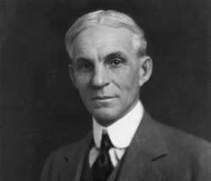
Henry Ford
1863 – 1947
“When everything seems to be going against you, remember that the airplane takes off against the wind, not with it.”
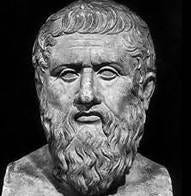
Plato
427 – 327 BC
“Never discourage anyone who makes progress, no matter how slow.”
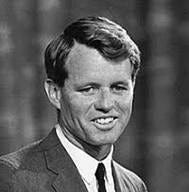
Robert F Kennedy
1925 – 1968
“The lessons of competition are lessons for life.”
Next Week: The legend of Coyote
What They Said newsletter goes out once per week. Substack provides me, as a writer, an alternative means of publication to supplement six books that I have written; four about southwestern culture that include American Indian trading, of which I am a 3rd generation trader, a major tribal ceremony, and a prominent Navajo artist biography. What They Said is a collection of quotations that I have accumulated for 65+ years. If you wish to become a paid subscriber, there is a choice of rates: $6 per month or $60 per year to support this project. Thanks.